MMI 2026
About this Edition
MMI 2026 brings the conversation to a question cutting across the field: how do we build multimedia AI systems that are not just powerful, but safe and explainable? Over two days, talks will cover safety in agentic AI and bias in machine learning, interpretability, uncertainty quantification, and how the modality of interaction shapes risk in information-seeking systems.
Workshop Chairs

Prof. Vincent Oria

Prof. Vincent Oria
Talk: Opening Remarks · Workshop Chair
Prof. Vincent Oria is a Professor of Computer Science and Chair of the Computer Science Department at the New Jersey Institute of Technology (NJIT). He received a diplôme d'ingénieur from the Institut National Polytechnique Houphouët-Boigny (formerly INSET) in Yamoussoukro, Côte d'Ivoire, in 1989, and a Ph.D. in Computer Science from the École Nationale Supérieure des Télécommunications (Telecom-ParisTech), Paris, France, in 1994.
His research interests include multimedia databases, spatiotemporal databases, search in high-dimensional spaces, and recommender systems. He has held visiting professor positions at several leading institutions, including the National Institute of Informatics (Tokyo, Japan), Telecom-ParisTech (Paris, France), University of Paris-IX Dauphine, INRIA, Conservatoire National des Arts et Métiers (CNAM, Paris, France), and the Chinese University of Hong Kong.
Prof. Oria served as General Co-Chair of the 2022 ACM International Conference on Multimedia Retrieval (ICMR) and Program Committee Co-Chair of ACM Multimedia 2022. He has served on the program and organizing committees of numerous conferences including ACM Multimedia, ACM ICMR, Multimedia Modeling, SISAP, ACM CIKM, ACM SIGMOD, VLDB, IEEE ICDE, and ACM SIGIR.
He is the recipient of the 2014 NJIT Ying Wu College of Computing Outstanding Achievement in Research Award and the 2015 ACM SIGMOD Test-of-Time Award, which recognizes the best paper from the SIGMOD proceedings 10 years prior based on the most impactful contribution over the intervening decade.
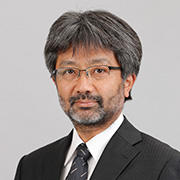
Prof. Shin'ichi Satoh

Prof. Shin'ichi Satoh
Talk: Biases in Machine Learning and AI ↓ Slides
Abstract: Modern machine learning algorithms effectively find specific patterns from training data. Object detectors learn visual appearances of specific types of objects with large variations, e.g., pose, lighting condition, scale, etc., face recognition systems learn appearances of individuals, segmentation algorithms learn appearances of interiors and boundaries of segments, and so on. These specific patterns are basically biases in training data, and in this sense, machine learning is very good at finding biases. On the other hand, biases may cause problems in machine learning and AI in general. Sometimes AI may mistakenly correlate criminal rates, income level, etc., to attributes such as gender, living places, alma mater, etc., or may have significantly poor classification performance only to specific demographic groups. Such cases obviously cause severely negative impact to our society. In this talk, first, actual biases found in machine learning will be visited, followed by our attempt to mitigate biases by fine tuning using unlabeled data. Finally bias detection in black-box machine learning algorithm with limited access will be discussed.
Prof. Shin'ichi Satoh is a Professor at the National Institute of Informatics (NII) in Tokyo, Japan, and a leading researcher in multimedia and computer vision.
His research focuses on video analysis, multimedia information retrieval, and large-scale visual data understanding, with particular emphasis on extracting knowledge from broadcast video archives and complex visual datasets.
Prof. Satoh has made significant contributions to image and video retrieval, multimedia databases, and visual content analysis, and he leads research efforts on intelligent systems that can interpret and organize visual information at scale.
He earned his Ph.D. in Engineering from the University of Tokyo and has authored hundreds of publications across computer vision, machine learning, and multimedia computing, with impactful work spanning both foundational methods and real-world applications.
At this workshop, Prof. Satoh brings deep expertise in multimedia AI and large-scale video understanding, offering insights into how intelligent systems can analyze and retrieve information from rich visual data sources.
Invited Speakers
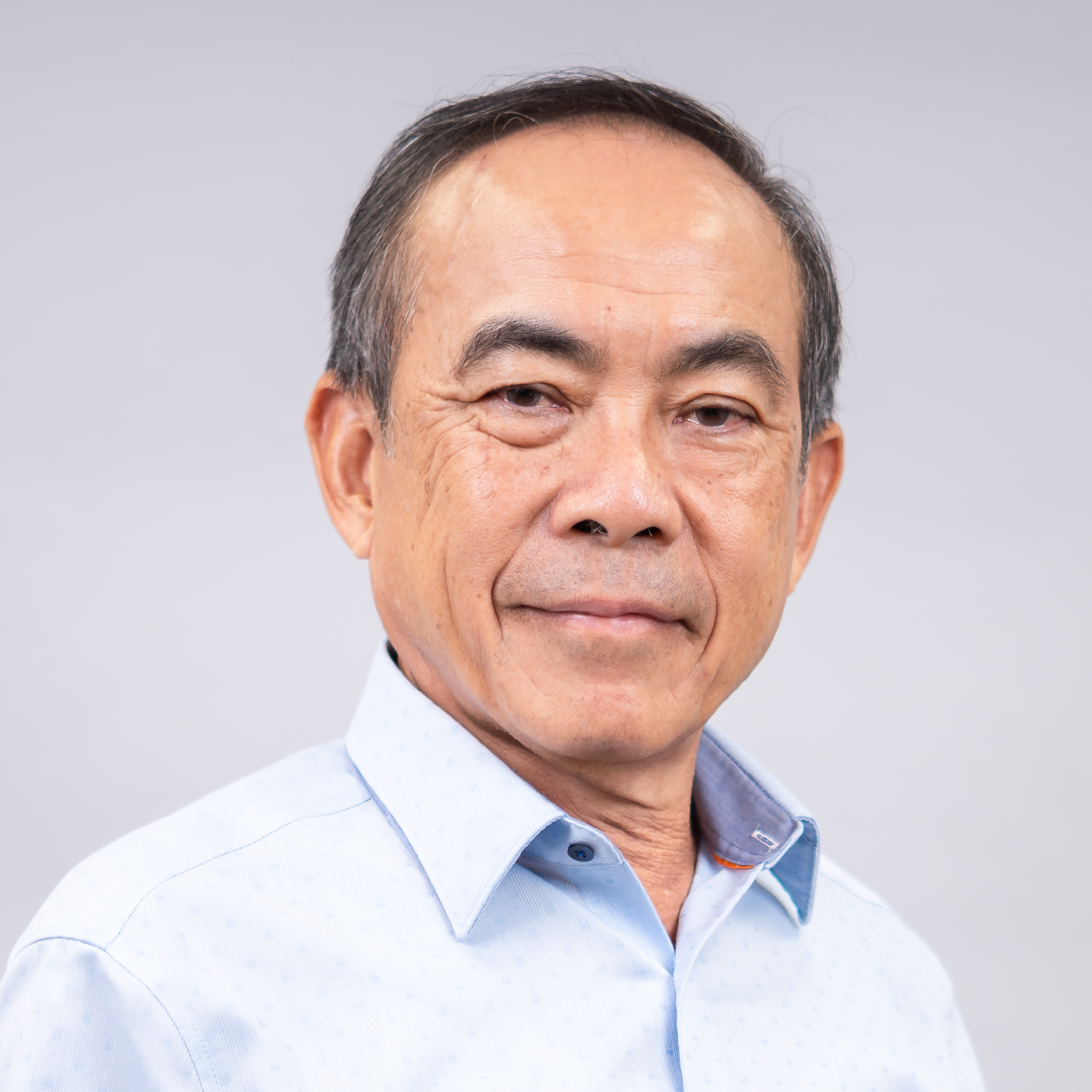
Prof. Tat-Seng Chua

Prof. Tat-Seng Chua
Talk: Safety in the Agentic AI Era ↓ Slides
Abstract: As large foundation models reach the limits of scaling, we are entering the era of agentic AI, where intelligent systems act autonomously and collaboratively in complex environments. This raises profound safety challenges in multi-agent systems. This talk explores methods for ensuring safety, controllability, and governance in such systems.
Dr. Chua is a Professor at the School of Computing, National University of Singapore (NUS). He is also the Distinguished Visiting Professor of Tsinghua University, Sichuan University and Zhengzhou University. Dr. Chua was the Founding Dean of the School of Computing from 1998–2000. His research interests include multimodal foundation models, responsible AI, and conversational search and recommendation. He is the co-Director of NExT, a joint research Center between NUS and Tsinghua University.
Dr. Chua is the recipient of the 2015 ACM SIGMM Achievements Award, 2022 NUS Research Recognition Award, 2024 CCF Overseas Outstanding Technical Contributions Award, and is a Fellow of the Singapore National Academy of Science. He was the General Co-Chair of ACM Multimedia 2005, ACM SIGIR 2008, ACM Web Science 2015, WSDM 2023, ACM Web Conference (WWW) 2024, and ACM ICAIF 2025. His group has won many best paper awards, including the Outstanding Paper Award at ICLR 2025. Dr. Chua is the co-Founder of two technology startup companies in Singapore.
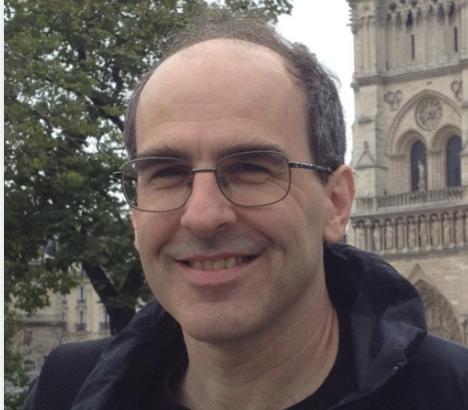
Prof. Michael E. Houle
Prof. Michael E. Houle
Talk: Dimensionality-Aware Analysis of Local Intrinsic Structure in Multimedia Data ↓ Slides
Abstract: This survey presents a dimensionality-aware approach to data analysis based on Local Intrinsic Dimensionality (LID), a framework for describing the local complexity of high-dimensional data. Unlike global notions of dimension, LID is defined through the growth rate of neighborhood probability mass, and is equivalent to indiscriminability — the difficulty of distinguishing nearby points. This formulation shows that local distributions can be described in terms of both density and dimensionality, connecting ideas from statistics, machine learning, and similarity search.
The talk reviews practical methods for estimating LID and their use in multimedia applications such as representation learning and outlier detection. It highlights challenges that arise in deep models, where locality must be balanced against computational constraints, and discusses how density-ratio approaches can be adapted to account for variation in intrinsic dimension across the data. Overall, the talk emphasizes how accounting for local dimensional structure can lead to more reliable analysis of complex multimedia data.
Prof. Michael E. Houle is a Senior University Lecturer in the Department of Computer Science at the New Jersey Institute of Technology (NJIT). He received his Ph.D. in 1989 from McGill University in the area of computational geometry, and his research interests have evolved considerably since.
After graduating, he spent nearly three years in Japan before moving to Australia for nine years, holding positions at the University of Newcastle and the University of Sydney, where he developed a strong focus on algorithmics. In 2001 he returned to Japan, joining IBM's Tokyo Research Laboratory, where his work centered on approximate similarity search and shared-neighbor clustering for data mining applications. From 2004 to 2021, at the National Institute of Informatics (NII) in Tokyo, his theoretical interests concentrated on dimensionality and scalability, targeting fundamental AI, machine learning, and data mining tasks including search, clustering, classification, and outlier detection.
Prof. Houle's work on local intrinsic dimensionality (LID) has significantly influenced modern approaches to understanding complexity in machine learning and deep learning systems. He is a highly accomplished researcher with numerous publications and multiple best paper awards at leading venues such as ICDM, SISAP, and SDM, reflecting the impact of his contributions to data mining and AI.
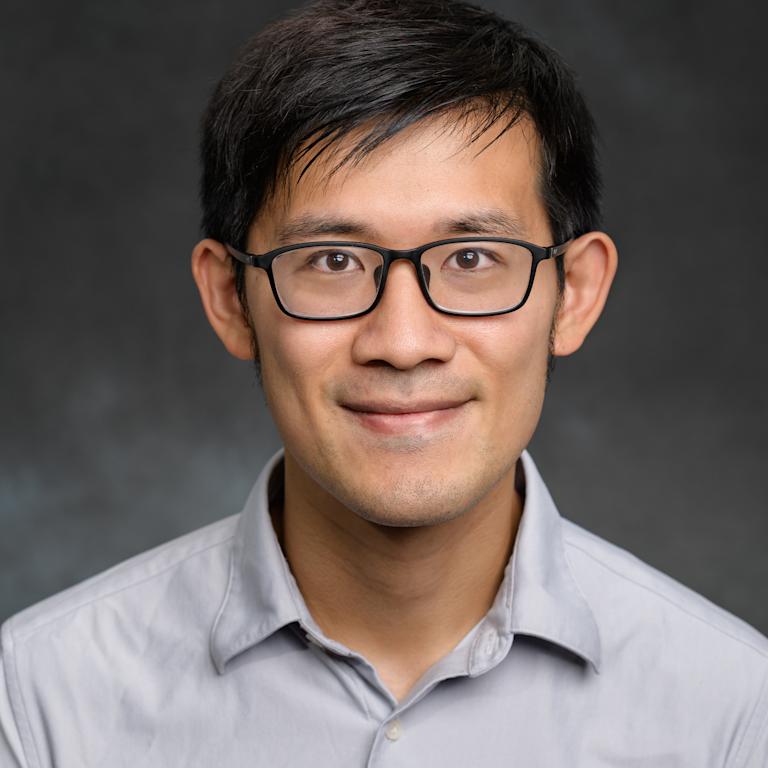
Prof. Zining Zhu

Prof. Zining Zhu
Talk: Mechanistic Interpretation and Reasoning AI ↓ Slides
Abstract: In recent years, AI models have shown strong capabilities in agentic reasoning on multiple media. Despite their promises, it has been challenging to control the reasoning procedure, due to the opaque nature of the models. In the recent a few years, we try to explain the reasons behind these behavior with inquiries into the parameters, from the layers to neurons and SAE features. Leveraging the findings, we also try to improve the reasoning behavior, improving the honesty and efficiency. I'll present several works along these directions, and discuss intuitions regarding the explainability and controllability.
Prof. Zhu is an Assistant Professor at the Department of Computer Science at the Charles V. Schaefer Jr. School of Engineering and Science at the Stevens Institute of Technology. He directs the Explainable and Controllable AI lab. He is affiliated with the Stevens Institute for Artificial Intelligence (SIAI) and the Center for Research Toward Advancing Financial Technologies (CRAFT). Prior to joining Stevens, Prof. Zhu received Ph.D. degree at the University of Toronto and Vector Institute, advised by Dr. Frank Rudzicz. His research is in Natural Language Processing and Explainable AI including understanding the mechanisms and abilities of AIs, and incorporating the findings into controlling the AIs. Prof. Zhu looks forward to building safe, trustworthy and efficient agentic AIs that can assist humans discover knowledge and better perform high-stake tasks. Prof. Zhu has received paper award at NAACL. He has served as an Area Chair for NeurIPS, ICML, and an Action Editor for ACL Rolling Review.
Google Scholar · Talk: Improving LLM Reasoning with Mechanistic Interpretability Insights

Prof. Vivek K. Singh

Prof. Vivek K. Singh
Talk: How modalities impact safety in information seeking ↓ Slides
Abstract: Access to reliable health information is critical, especially in vulnerable moments when misleading or unsafe guidance can cause real harm. As AI systems increasingly mediate this access, their ability to resist manipulation and prevent harmful outputs becomes essential for public safety, and equity remains central because uneven protections can expose some users to greater risk than others. This talk examines how modality shapes these outcomes. Here, modality refers to the forms of expression that mediate interaction between users and large language models, including language choice, transliteration, emojis, and poetic structure. We discuss how these forms can shift how safety mechanisms interpret and respond to queries, sometimes weakening protections, and argue that modality is a key but understudied factor in shaping risk and equitable access to information.
Prof. Vivek K. Singh is an Associate Professor of Library and Information Science at the School of Communication and Information, Rutgers University. He directs the Behavioral Informatics Lab, which works at the intersection of human behavior and information technology, integrating multimodal data, social science theories, and computational methods to build human-centered AI systems.
His research spans two primary areas: AI for Health & Wellness — developing algorithms using phone logs, social media, and other multimodal data to assess mental health and wellbeing — and Digital Harm Reduction, addressing cyberbullying, misinformation, privacy, and algorithmic bias in online environments. His long-running Rutgers Wellness Study (2021–present) exemplifies this applied focus.
Prof. Singh has published 30+ journal articles with 4,000+ citations, including a cover article in Science, and his research has been featured in The New York Times, BBC, and The Wall Street Journal. He has received the ASIS&T SIG-Social Media Senior Researcher Award (2024), ACM Web Science Best Paper Award (2024), IEEE Intelligent Systems Best Paper Award (2022), and a Google Research Faculty Award (2016), with funding from NSF, NIH, DHS, Google, and OpenAI.
He received his Ph.D. in Information and Computer Science from the University of California, Irvine, and holds a Master of Computing and a Bachelor of Engineering in Computer Engineering from the National University of Singapore.
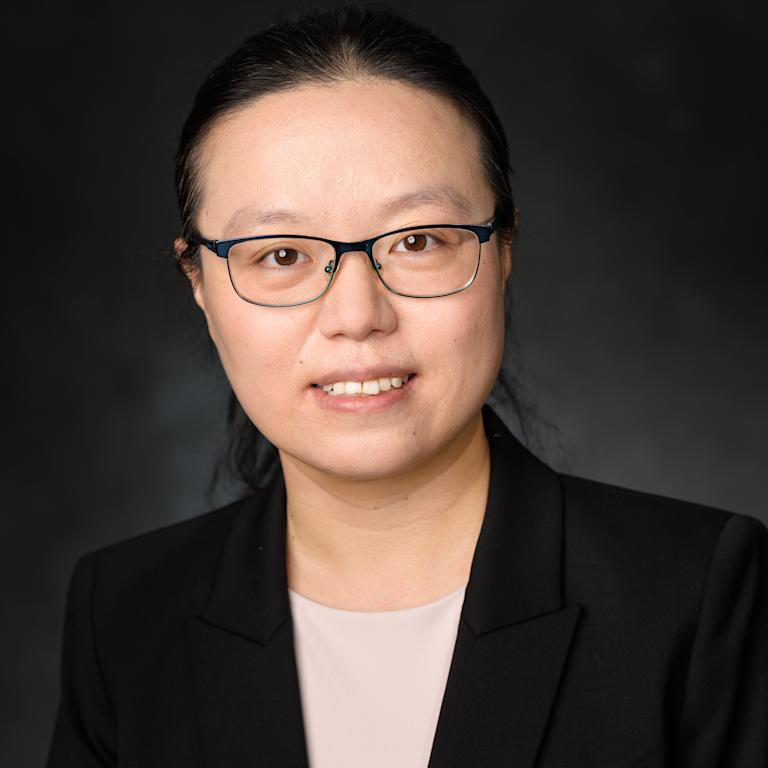
Prof. Ping Wang
Prof. Ping Wang
Talk: Towards Reasoning-Augmented Natural Language Querying for Domain-Specific NoSQL Databases ↓ Slides
Abstract: Efficient retrieval of critical information from large-scale healthcare databases remains a significant challenge due to the complexity and heterogeneity of medical data. Existing natural language querying (NLQ) research has primarily focused on relational databases, whose rigid data schemas and limited support for full-text search capabilities restrict their ability to effectively manage the large volume of unstructured and semi-structured healthcare data. To address these limitations, we shift the focus from relational databases to NoSQL databases and investigate the potential of NLQ in this setting. In this talk, I will present our systematic study of NLQ for NoSQL healthcare databases, spanning dataset construction, model design, controllable reasoning, complexity modeling, and comprehensive evaluation. We first formally define the problem of NLQ over NoSQL databases and introduce an initial two-stage controllable framework, along with a benchmark dataset designed for rigorous evaluation. Building upon this foundation, we further advance the controllable reasoning with large language models through a staged reasoning approach, InstructEx, which first analyzes and decomposes user intent and then generates executable query structures under explicit constraints. To address practical deployment challenges related to query efficiency, we further develop a query complexity taxonomy and propose an efficiency-aware optimization framework, RACE-ESQ, which dynamically adapts retrieval behavior based on query complexity. Together, these efforts establish a unified framework for reliable, controllable, and efficient NLQ over large-scale healthcare NoSQL databases, advancing efficient and accurate information retrieval for complex healthcare data environments.
Prof. Ping Wang is an Assistant Professor in the Department of Computer Science at Stevens Institute of Technology and an affiliated member of The Stevens Institute for Artificial Intelligence (SIAI). She received her Ph.D. from Virginia Tech under the supervision of Dr. Chandan K. Reddy in 2021. Her primary research interests are in the broad area of data mining and machine learning, with a particular focus on healthcare analytics, including clinical question answering, information extraction, graph mining, and survival analysis. She has published papers in leading conferences (e.g., WWW, CIKM, and AAAI) and high-impact journals (e.g., ACM Computing Surveys and IEEE TKDE).
She received the NSF CRII Award in 2023 and the Amazon Research Award in 2025. She was recognized as the "Research PhD Student of the Year" (one per year) in the Department of Computer Science at Virginia Tech in 2021.
Prof. Wang has served the research community in multiple roles, including AAAI 2026 Program Committee Member, IEEE ICDM 2025 Publicity Chair, Session Chair at IEEE/ACM CHASE 2025, COLING 2025 Program Committee Member, AAAI 2025 Doctoral Consortium Program Committee, AAAI 2025 Program Committee Member, ACL 2024 Program Committee Member, and Reviewer for Transactions on Neural Networks and Learning Systems (TNNLS).

Prof. Cathal Gurrin

Prof. Cathal Gurrin
Talk: Lifelogs and Personal Data. An Unsolved Challenge ↓ Slides
Abstract: The concept of lifelogging refers to the capture, storage and access to large archives of personal media that is captured over an extended period of time. In the most well-known form, these lifelogs are gathered passively using devices such as wearable cameras and other hardware/software sensors. Over the past decade, significant progress has been made in the process of organising and accessing such lifelogs, turning them from large data repositories into impactful information systems supporting a wide variety of access mechanisms with the promise of becoming an always-on daily life assistant. In this talk, we will review how modern lifelog retrieval systems work and explore the challenge of getting access to sufficient lifelog data to develop and evaluate such lifelog retrieval systems. We will look at the latest lifelog-related datasets being created and conclude with a suggestion of what an ideal next-generation dataset would look like.
Prof. Cathal Gurrin is a Full Professor in the School of Computing at Dublin City University (DCU), where he also serves as Assistant Head for International Engagement and Deputy Director of the ADAPT Centre.
His research focuses on lifelogging, personal analytics, and multimedia information retrieval, with an emphasis on using wearable sensors and AI-driven data analysis to build assistive technologies that enhance human memory, health, and productivity.
Prof. Gurrin is widely recognized as a pioneer in lifelogging, having continuously captured a personal digital record of his daily life since 2006 using wearable devices — making him likely the longest continuous wearer of such a device in the world. His personal archive has grown to over 18 million images, generating roughly a terabyte of personal data per year. Using information retrieval algorithms, his team segments this archive into life events such as eating, driving, and social interactions, with new events recognised daily through machine learning. As he describes it: "If I need to remember where I left my keys, or where I parked my car, or what wine I drank at an event two years ago... the answers should all be there."
He has led and contributed to numerous international research initiatives and is the founder and co-organizer of major benchmarking efforts such as the Lifelog Search Challenge, helping advance global research in multimedia retrieval and human-centered AI.
At this workshop, Prof. Gurrin brings deep expertise at the intersection of AI, human-centered computing, and large-scale personal data systems, offering insights into how emerging technologies can augment human capabilities.
Google Scholar · Talk: Introduction to Lifelogging · Talk: Lifelogging Research

Prof. Enrique Dunn
Prof. Enrique Dunn
Talk: Augmented Reality for Perceptual Task Guidance ↓ Slides
Abstract: Artificial intelligence, computer vision, and augmented reality are converging to create interactive systems that can perceive the physical world, reason about human activity, and deliver context-sensitive guidance. We revisit the foundations and evolution of augmented and extended reality, from early head-mounted displays and virtual fixtures to contemporary spatial computing platforms, and situates these developments within broader advances in computer vision and AI. Our central focus is Perceptual Task Guidance, an emerging paradigm in which AR systems use visual perception, task modeling, language grounding, user modeling, and spatial communication to assist humans during complex physical tasks. We will discuss the technical goals of building an augmented reality apparatus capable of grounded physical mapping, automated task understanding, responsive interaction, customization, and generalization across tasks and users. A case study, MARCuS: Multi-Modal AR Cube Solver, demonstrates these ideas through a HoloLens-based system that combines perception-enabled AR, multimodal guidance, adaptive visual feedback, and state verification.
Prof. Enrique Dunn is an Associate Professor in the Department of Computer Science at Stevens Institute of Technology. His research focuses on 3D Computer Vision, investigating the geometric and semantic relationships among a 3D scene and a depicting set of images.
Dr. Dunn earned a degree in Computer Engineering from the Autonomous University of Baja California (Mexico) in 1999. He completed a Master's degree in Computer Science in 2001 and a doctorate in Electronics and Telecommunications in 2006, both from the Ensenada Center for Scientific Research and Higher Education (Mexico). During his doctorate studies, Dr. Dunn carried out research while visiting the French Institute for Research in Computer Science and Control in Rocquencourt.
He joined the Department of Computer Science of the University of North Carolina at Chapel Hill as a visiting scholar in 2008, after being awarded a one-year Postdoctoral Fellowship for Studies Abroad by the National Council for Science and Technology (Mexico). He remained with UNC-CH CS Department as a postdoctoral researcher until he became a research assistant professor in 2012. Dr. Dunn has authored over 40 papers in international conferences and journals.
Dr. Dunn has served the research community as Associate Editor for the Elsevier Journal of Image and Vision Computing (IMAVIS), Area Chair at ECCV 2020 and 3DV Conference, and Reviewer for IEEE Conference on Computer Vision and Pattern Recognition (CVPR).
Prof. Shin'ichi Satoh
Prof. Shin'ichi Satoh
Talk: Biases in Machine Learning and AI ↓ Slides
Abstract: Modern machine learning algorithms effectively find specific patterns from training data. Object detectors learn visual appearances of specific types of objects with large variations, e.g., pose, lighting condition, scale, etc., face recognition systems learn appearances of individuals, segmentation algorithms learn appearances of interiors and boundaries of segments, and so on. These specific patterns are basically biases in training data, and in this sense, machine learning is very good at finding biases. On the other hand, biases may cause problems in machine learning and AI in general. Sometimes AI may mistakenly correlate criminal rates, income level, etc., to attributes such as gender, living places, alma mater, etc., or may have significantly poor classification performance only to specific demographic groups. Such cases obviously cause severely negative impact to our society. In this talk, first, actual biases found in machine learning will be visited, followed by our attempt to mitigate biases by fine tuning using unlabeled data. Finally bias detection in black-box machine learning algorithm with limited access will be discussed.
Prof. Shin'ichi Satoh is a Professor at the National Institute of Informatics (NII) in Tokyo, Japan, and a leading researcher in multimedia and computer vision.
His research focuses on video analysis, multimedia information retrieval, and large-scale visual data understanding, with particular emphasis on extracting knowledge from broadcast video archives and complex visual datasets.
Prof. Satoh has made significant contributions to image and video retrieval, multimedia databases, and visual content analysis, and he leads research efforts on intelligent systems that can interpret and organize visual information at scale.
He earned his Ph.D. in Engineering from the University of Tokyo and has authored hundreds of publications across computer vision, machine learning, and multimedia computing, with impactful work spanning both foundational methods and real-world applications.
At this workshop, Prof. Satoh brings deep expertise in multimedia AI and large-scale video understanding, offering insights into how intelligent systems can analyze and retrieve information from rich visual data sources.

Prof. Yan Sun
Prof. Yan Sun
Talk: Uncertainty Quantification for Generative Models ↓ Slides
Abstract: Uncertainty quantification plays a major role in ensuring the reliability of traditional machine learning systems. This talk presents two applications of uncertainty quantification techniques in modern generative models. The first part focuses on statistical inference for generative model evaluation (e.g., assess if one model performs better than the other with statistical confidence). By leveraging a relative KL divergence, we provide an estimator that is asymptotically normal, enabling valid inference for model comparison. The method can be applied to compare the performance of commonly used generative models such as auto-encoders, diffusion models, and auto-regressive language models. The second part focuses on reasoning language models. When presented with incomplete or ambiguous questions, these models may waste computational resources by generating unnecessarily long reasoning traces. We develop methods that extract uncertainty signals from the model's reasoning traces to determine when reasoning should stop under high uncertainty. These approaches can potentially reduce the computational cost of reasoning models and enable them to request clarification when needed.
Prof. Yan Sun is an Assistant Professor in the Department of Mathematical Sciences at New Jersey Institute of Technology (NJIT). Before joining NJIT, he was a Postdoc at UPenn. He obtained his Ph.D. in Statistics from Purdue University in 2022. His research focuses on developing trustworthy machine learning models empowered by statistical ideas, focusing on their uncertainty and reliability properties.
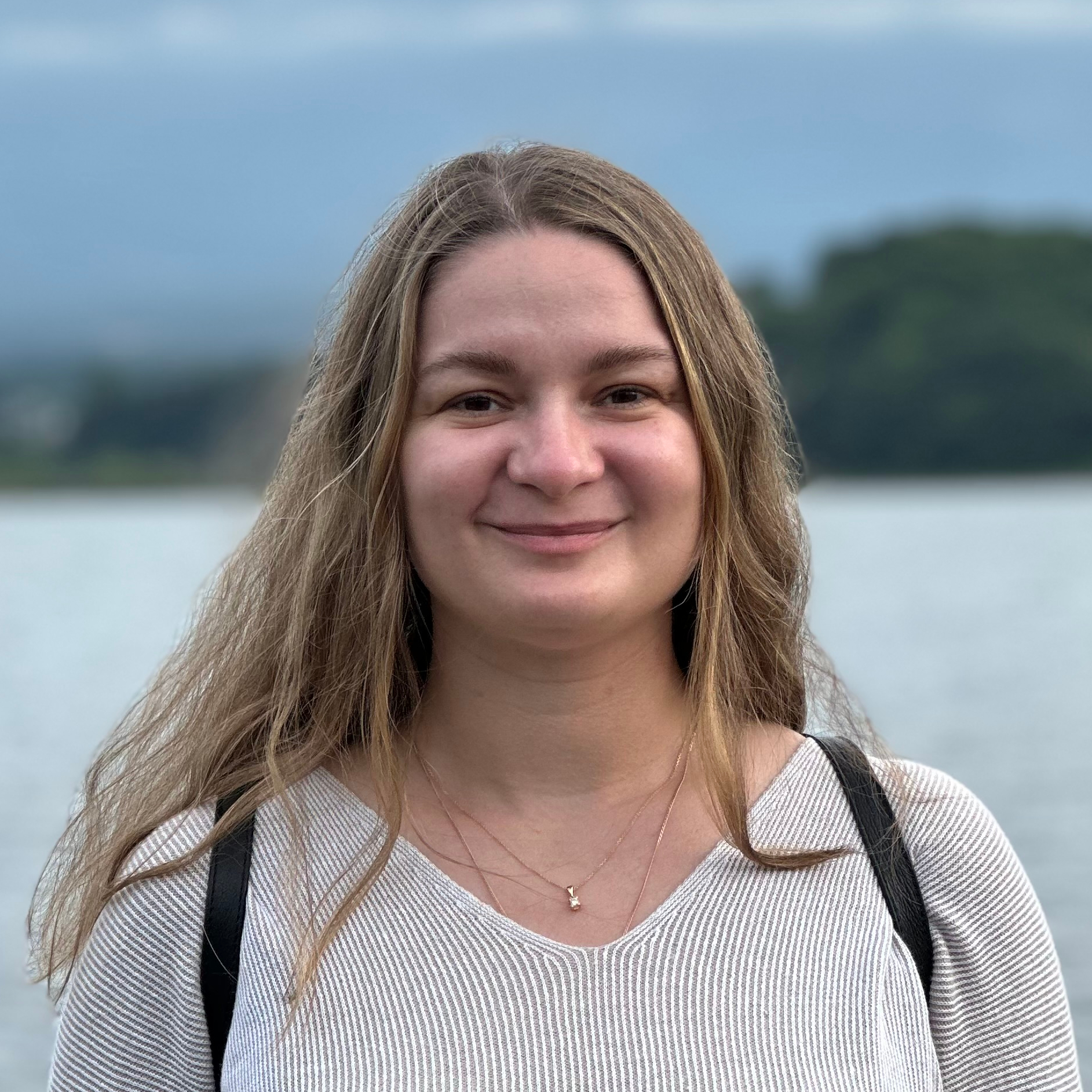
Prof. Lesia Semenova
Prof. Lesia Semenova
Talk: Beyond the Single Best Model ↓ Slides
Abstract: Machine learning models are increasingly used in high-stakes domains such as medicine, but their predictions and explanations are often evaluated one model at a time. This can be misleading: in many learning problems, multiple models achieve similar predictive performance while relying on different features, concepts, or internal representations. This phenomenon, known as the Rashomon Effect, raises a central question for trustworthy AI: which conclusions are stable across many good models, and which are results of a particular training run or modeling choice? In this talk, I will discuss recent work on interpretability and model multiplicity. I will show how reasoning over sets of near-optimal models can support trustworthy AI goals, with an emphasis on interpretability, stability, and high-stakes decision support.
Prof. Lesia Semenova is an Assistant Professor of Computer Science at Rutgers University, where she leads a research group that advances the foundations, algorithms, and applied practice for safe, trustworthy, and interpretable AI through model and representation multiplicity. Her work formalizes the Rashomon Effect—the existence of many equally accurate but behaviorally different models—to move the field beyond a single-model mindset.
A key question her work addresses is how to use model multiplicity in practice. By characterizing Rashomon sets, or sets of near-optimal models, she develops methods to navigate these spaces and identify models that satisfy additional desiderata, such as interpretability or robustness. This approach leverages model diversity to enable new algorithmic tools for robust recourse, personalized alignment, and stable decision-making in high-stakes fields like healthcare and public policy. Ultimately, her research aims to transform uncertainty from a source of instability into a resource for trust. She is increasingly extending these ideas to foundation models and LLMs, where multiplicity naturally arises through internal representations and reasoning paths.
Before joining Rutgers, she was a postdoctoral researcher at Microsoft Research (NYC) and received her PhD in Computer Science from Duke University. Earlier, she worked on augmented reality at Samsung R&D Institute Ukraine and earned her MS and BS in Applied Mathematics from Taras Shevchenko National University of Kyiv.
Google Scholar · Talk: Existence of Simpler-Yet-Accurate Machine Learning Models
Schedule
| 09:00 – 09:20 | Check-In & Coffee |
| 09:20 – 09:30 | Opening Remarks |
| 09:30 – 10:40 | Keynote |
| 10:40 – 11:00 | Coffee Break |
| 11:00 – 11:45 | Invited Talk |
| 11:45 – 12:30 | Invited Talk |
| 12:30 – 13:30 | Lunch Break |
| 13:30 – 14:15 | Invited Talk |
| 14:15 – 15:00 | Invited Talk |
| 15:00 – 15:20 | Coffee Break |
| 15:20 – 16:20 |
Panel / Discussion
Future Directions in Multimedia Intelligence and Multimodal AI
|
| 16:20 – 18:20 |
Networking Reception & Social Gathering
Highlander Pub, NJIT Campus Center
|
| 09:00 – 09:30 | Check-In & Coffee |
| 09:30 – 10:40 | Keynote |
| 10:40 – 11:00 | Coffee Break |
| 11:00 – 11:45 | Invited Talk |
| 11:45 – 12:30 | Invited Talk |
| 12:30 – 13:30 | Lunch Break |
| 13:30 – 14:15 | Invited Talk |
| 14:15 – 15:00 | Invited Talk |
| 15:00 – 15:10 | Closing Remarks |
Venue
NJIT Campus, GITC 1100, Newark, NJ
Organizing Committee
Vincent Oria (NJIT, USA)
Shin'ichi Satoh (NII, Japan)
Mohammad Dindoost (NJIT, USA)
Sponsors